Choosing a battery manufacturer for long-term OEM supply is a strategic decision that can directly affect product performance, manufacturing continuity, customer satisfaction, and business growth. For original equipment manufacturers (OEMs), selecting a supplier is not simply about finding a battery at the right price. It is about establishing a reliable partnership that can support consistent specifications, repeat orders, technical requirements, and changing production demands.
Whether you manufacture electric vehicles, solar energy systems, industrial equipment, power backup products, or electronic devices, your battery supplier should understand your application and production objectives. The right manufacturing partner should be able to discuss battery chemistry, voltage, capacity, dimensions, discharge requirements, battery management systems, quality verification, and future supply planning.
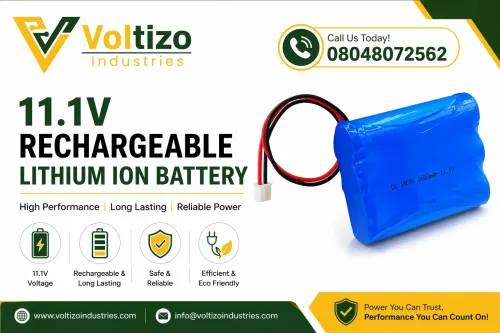
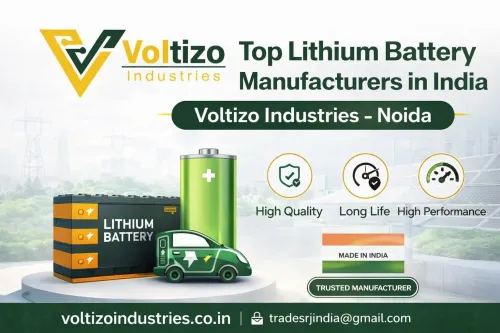
Voltizo Industries, based in Noida, India, offers lithium battery packs, LiFePO4 battery solutions, and other power-related products for commercial and industrial applications. OEM buyers can evaluate their requirements and discuss suitable battery configurations before establishing a long-term supply arrangement.
1. Evaluate the Manufacturer's Product and Application Expertise
The first step is to determine whether the battery manufacturer understands your specific industry and intended application. Different products require different battery characteristics, and a configuration suitable for one application may not be appropriate for another.
For example, an electric vehicle manufacturer may prioritize discharge capability, available space, operating conditions, and weight. A solar energy company may focus on usable energy capacity, charging compatibility, and expected cycling requirements. Industrial equipment manufacturers may require specific voltage levels, connector arrangements, enclosure dimensions, and communication interfaces.
Before selecting a supplier, explain how the battery will be used, the expected operating conditions, and the performance requirements of your finished product. A manufacturer that can evaluate these details is better positioned to help identify a suitable battery configuration.
2. Check Battery Chemistry and Technical Specifications
Battery chemistry is an important consideration when establishing a long-term OEM supply relationship. Lithium-ion battery packs and lithium iron phosphate (LiFePO4 or LFP) battery packs offer different characteristics, and the appropriate choice depends on the application's energy, power, safety, space, and operating requirements.
LFP batteries are commonly considered for applications that value thermal stability and repeated charge-discharge operation. Other lithium-ion chemistries may be suitable where energy density and package size are important. The final selection should be based on verified cell specifications and the complete battery system design.
Ask the manufacturer to provide a clear technical specification covering nominal voltage, capacity in ampere-hours, energy in watt-hours, charge and discharge current limits, operating temperature, dimensions, weight, and charging requirements.
For repeat OEM orders, these specifications should be documented and controlled so that the supplied battery packs continue to match the requirements of your equipment.
3. Assess Battery Quality Control and Testing Procedures
Consistent quality is essential when a battery becomes part of a finished product sold under your brand. Differences in electrical performance, assembly quality, or component selection can affect the reliability of the complete system.
Before committing to regular purchases, ask the supplier how battery cells and other components are inspected, how packs are assembled, and what checks are performed before dispatch. Depending on the product design, relevant checks may include voltage verification, capacity testing, charging and discharging tests, insulation checks, protection-circuit verification, and inspection of wiring, connectors, and enclosures.
You should also clarify how defective units are identified, documented, investigated, and handled. Written inspection criteria and traceable production records can make it easier to manage quality across multiple orders.
Rather than relying only on general claims about product quality, evaluate the manufacturer's actual testing process and request relevant documentation for the battery model you intend to purchase.
4. Verify Battery Management System Compatibility
The battery management system (BMS) is a critical part of many lithium battery packs. Depending on its design, it may monitor cell voltages and temperatures, manage charging and discharging limits, balance cells, and provide protective responses to abnormal conditions.
For OEM applications, BMS compatibility must be assessed alongside the battery cells. The BMS should support the required voltage, current, protection settings, and communication requirements of the finished equipment.
If your product uses CAN, RS485, or another communication interface, confirm that the proposed battery configuration supports the required protocol and communication behaviour. Compatibility should be validated with the actual controller, charger, inverter, or other connected equipment.
A battery pack that fits physically but does not communicate correctly with the host system can create unnecessary integration problems. Early technical discussions and sample testing can help reduce this risk.
5. Evaluate Customization and OEM Engineering Support
Standard battery packs may suit some products, but many OEMs require application-specific configurations. These requirements can include different dimensions, mounting arrangements, connectors, cable lengths, voltage levels, capacities, enclosure designs, or communication features.
Before selecting a supplier, determine whether it can evaluate your product drawings, electrical requirements, and installation constraints. Ask how design changes are reviewed, how samples are approved, and how the final specification is documented before mass production.
For long-term supply, it is particularly important to establish a controlled process for engineering changes. Any change to the cell type, BMS, connectors, or other critical components should be assessed for compatibility and approved according to the agreed process.
Voltizo Industries supplies lithium battery packs and LiFePO4 battery solutions. OEM buyers can discuss their application requirements with the company to determine whether a standard or customized configuration is suitable.
6. Examine Production Capacity and Repeat-Order Planning
A supplier may be able to fulfil a small initial order but face different challenges when your business requires regular monthly or quarterly deliveries. Long-term OEM supply therefore requires a clear understanding of production planning and order fulfilment.
Discuss your expected order quantities, forecast periods, lead times, minimum order quantities, and seasonal demand variations. Ask how the supplier manages component availability and communicates potential delays.
For products with approved specifications, establish a repeat-order process that references the correct battery model, technical documentation, approved components, packaging requirements, and inspection criteria.
It is also useful to agree on how the manufacturer will notify you about component discontinuation or changes that could affect future deliveries. This helps your engineering and procurement teams plan for product continuity.
7. Review Certifications, Documentation, and Compliance Requirements
Battery compliance requirements vary according to the battery design, application, transport method, and destination market. OEM buyers should identify the applicable requirements before finalizing a supply agreement.
Ask the manufacturer to provide relevant test reports, declarations, certification documents, and battery datasheets for the exact product being supplied. Confirm that the documents apply to the intended model and configuration rather than assuming that a certificate for one battery automatically covers every product.
Depending on the application and market, requirements may include applicable battery safety standards, transport testing, labelling, and other regulatory documentation. For lithium batteries transported internationally, the relevant UN 38.3 test documentation should be checked where applicable.
If your finished product is sold under your own brand, clarify which compliance responsibilities belong to the battery supplier and which remain with the OEM.
8. Compare Total Cost of Ownership, Not Only Purchase Price
The lowest battery quotation may not represent the best long-term value. OEM buyers should evaluate the complete cost of integrating and supporting the battery throughout the product's operating life.
Relevant factors include the initial unit price, charging compatibility, integration engineering, inspection requirements, warranty conditions, maintenance considerations, logistics, and the cost of handling product failures or supply interruptions.
For example, a battery with a lower purchase price may require additional engineering changes or more extensive incoming inspections. A supplier offering better documentation and consistent specifications may reduce some of these operational burdens.
Request comparable quotations with clearly defined specifications, order quantities, delivery terms, payment conditions, warranty coverage, and testing arrangements. This makes supplier evaluation more meaningful and helps procurement teams make decisions based on overall business requirements.
9. Assess Communication and After-Sales Support
A long-term OEM relationship requires effective communication before, during, and after production. Technical questions, design changes, quality concerns, and delivery updates should have a clear route to resolution.
Before signing a supply agreement, understand how the supplier handles technical enquiries, warranty claims, product investigations, and replacement requests. Clarify the expected response process and the documentation required when an issue occurs.
It is also useful to identify the appropriate contact for engineering coordination and the contact responsible for commercial and delivery matters. Clear responsibilities can help prevent avoidable delays when your production schedule depends on battery availability.
Evaluate the manufacturer's support arrangements based on actual processes, agreed service expectations, and relevant experience rather than general promises alone.
10. Start with a Sample Evaluation Before Bulk Orders
A structured sample evaluation is a practical step before committing to large or recurring orders. It gives your engineering team an opportunity to verify whether the proposed battery meets the requirements of your finished product.
Test the sample under representative operating conditions. Depending on the application, this may involve checking dimensions, electrical performance, charging behaviour, communication with the host system, protection functions, thermal behaviour, and mechanical integration.
Record the results and document any changes required before approval. Once the sample is accepted, establish a clear reference specification for production orders and incoming quality checks.
This process creates a stronger foundation for repeat purchases and reduces the risk of discovering compatibility problems after a large shipment has arrived.
Why Consider Voltizo Industries for OEM Battery Supply?
Voltizo Industries, based in Noida, India, offers lithium battery packs, LiFePO4 battery solutions, and related power products for different commercial and industrial requirements.
For OEM buyers, the first step is to define the application's electrical specifications, physical constraints, operating conditions, and expected order quantities. Sharing these details allows the supplier to assess the required battery configuration and identify the technical information needed for a quotation.
Businesses planning regular purchases should also discuss sample approval, production specifications, testing documentation, delivery schedules, warranty terms, and the process for managing future design changes.
Whether you are developing a new product or looking for a supplier for an established product line, contact Voltizo Industries to discuss your battery requirements and evaluate a suitable supply arrangement.
Frequently Asked Questions
What should an OEM look for in a battery manufacturer?
An OEM should evaluate technical expertise, battery specifications, quality-control procedures, BMS compatibility, customization capabilities, documentation, production planning, delivery reliability, and after-sales support. The supplier should be able to meet the requirements of the finished product and support repeat orders.
Why is specification consistency important for long-term battery supply?
Consistent specifications help ensure that replacement and repeat-order battery packs remain compatible with the OEM's equipment. Changes to voltage, capacity, connectors, BMS settings, dimensions, or components should be reviewed before being introduced into production.
Should an OEM test battery samples before placing a bulk order?
Yes. Sample evaluation helps confirm electrical performance, physical fit, charging compatibility, communication behaviour, and other application-specific requirements before larger quantities are purchased.
How can an OEM verify the quality of a lithium battery manufacturer?
Request relevant product datasheets, test records, inspection procedures, traceability information, and applicable compliance documentation. Evaluate the manufacturer's actual process for identifying and resolving quality issues.
What information is required to request an OEM battery quotation?
Provide the intended application, required voltage, capacity, discharge current, charging requirements, physical dimensions, connector details, communication requirements, expected order quantity, and destination market. Drawings or an existing battery specification can help the supplier evaluate the project.
How can an OEM reduce the risk of battery supply interruptions?
Share realistic demand forecasts, agree on lead times, establish a repeat-order process, and document approved specifications. Discuss component availability and notification procedures for changes that could affect future production.
Can Voltizo Industries support customized battery requirements?
Voltizo Industries offers lithium battery and LiFePO4 battery products. OEM buyers should share their technical and physical requirements with the company to confirm the available customization options and suitability for the intended application.
Build a Reliable Long-Term OEM Battery Supply Partnership
Choosing a battery manufacturer is a decision that affects more than procurement costs. Technical compatibility, quality verification, documentation, production planning, and responsive support all contribute to a dependable supply relationship.
By defining your requirements, validating samples, documenting approved specifications, and agreeing on a clear supply process, your business can establish a stronger foundation for recurring battery purchases.
Contact Voltizo Industries through https://www.voltizoindustries.co.in/ to discuss your OEM battery requirements, request technical information, and explore suitable lithium battery pack solutions for your business.
Keywords