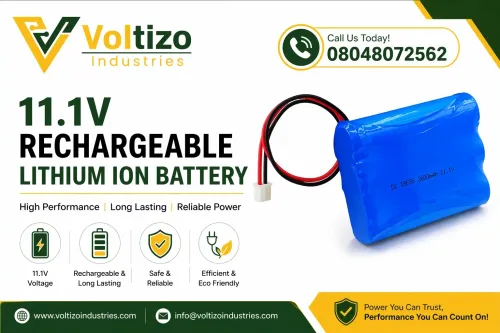
OEM companies increasingly need battery packs designed specifically around their products rather than standard batteries that may not match the required voltage, capacity, dimensions or operating conditions. Choosing the right lithium battery pack manufacturer is therefore an important part of product development, especially for electric mobility, solar energy storage, industrial equipment, medical devices, telecom systems and backup power products.
A capable OEM battery partner should be able to understand the product's power requirements, recommend suitable cells and battery chemistry, configure the pack, integrate the appropriate Battery Management System (BMS), perform quality testing and support scalable production. Voltizo Industries provides customized lithium battery solutions based on requirements such as voltage, capacity, size, configuration and application.
Why OEMs Need a Custom Lithium Battery Pack
A standard battery may not always fit an OEM product. Different equipment can have different requirements for operating voltage, energy capacity, peak current, physical dimensions, charging method, connectors and communication.
A custom lithium battery pack allows the battery to be developed around the equipment instead of forcing the equipment design to accommodate an unsuitable battery. This can be particularly important where space is limited or where the battery must communicate with the product's electronics through a BMS.
For OEM projects, Voltizo Industries supports customized battery configurations according to application requirements.
1. Check the Manufacturer's Customization Capability
The first question an OEM should ask is whether the manufacturer can actually develop a battery according to the product specification.
Customization may involve voltage, Ah capacity, pack dimensions, cell configuration, connector selection, BMS settings, mounting arrangement and other application-specific requirements.
A manufacturer that only supplies fixed battery models may not be suitable for an OEM requiring a product-specific battery solution.
2. Evaluate Battery Cell Selection
Cell selection has a direct impact on battery performance, reliability and service life. The manufacturer should understand the application's energy requirements and select an appropriate cell configuration rather than simply using whichever cells are readily available.
For example, an OEM application may prioritize energy density, cycle life, discharge capability, operating temperature or long-term reliability depending on the product.
Voltizo's OEM approach includes cell selection and testing as part of the battery manufacturing process.
3. Understand the BMS Requirements
The Battery Management System is one of the most important parts of a lithium battery pack. It monitors and manages important battery parameters and provides protection functions.
For an OEM battery, the BMS should be selected according to the battery chemistry, voltage configuration, current requirements, charging conditions and overall product architecture.
For applications requiring communication between the battery and the main equipment, the BMS configuration and communication requirements should also be considered during development.
Voltizo specifically highlights BMS integration and configuration for customized OEM battery solutions.
4. Compare Lithium Battery Chemistry
The right battery chemistry depends on the application.
LiFePO4 is a type of lithium-ion chemistry that is often considered for applications where cycle life, stability and repeated charging and discharging are important. Other lithium-ion chemistries may be appropriate where energy density or other performance characteristics are more important.
The manufacturer should explain the advantages and limitations of the available chemistry rather than recommending a battery solely on price.
Voltizo offers both lithium-ion and LiFePO4 battery solutions for applications including solar, EV, industrial equipment and power backup.
5. Check Voltage and Capacity Requirements
OEM buyers should clearly define the required operating voltage and battery capacity before requesting a quotation.
Capacity is generally expressed in Ah, but the actual energy requirement also depends on voltage. The manufacturer should evaluate the equipment's power consumption, operating duration, discharge requirements and charging conditions before finalizing the battery configuration.
For solar and energy-storage applications, factors such as backup duration, inverter compatibility and discharge requirements become particularly important.
6. Evaluate Battery Pack Dimensions
Physical dimensions can be just as important as electrical specifications for an OEM product.
The battery may need to fit inside a specific enclosure or equipment compartment. The manufacturer should therefore be able to work with dimensional drawings and understand requirements related to length, width, height, mounting points, connectors and cable arrangement.
This is one of the major advantages of using a custom battery manufacturer instead of purchasing a generic battery pack.
7. Ask About Testing and Quality Control
OEM buyers should not evaluate a manufacturer only on its quoted price. Battery testing and quality control are equally important.
A reliable manufacturing process should include cell testing, pack assembly inspection, BMS verification and performance testing before delivery.
Voltizo describes its OEM manufacturing process as including cell selection and testing, battery-pack design, BMS installation and configuration, assembly, quality inspection and performance testing.
8. Consider Production Scalability
An OEM may initially require a small quantity for product development, followed by larger quantities after successful testing and market launch.
The battery manufacturer should therefore have the capability to support both development-stage requirements and future bulk production.
Scalable manufacturing can help an OEM avoid changing suppliers when production volumes increase.
9. Check Application Experience
The manufacturer's application knowledge can make a significant difference during battery development.
OEM lithium battery packs can be required for electric vehicles, e-rickshaws, solar energy storage, industrial equipment, telecom backup, medical equipment, UPS systems and portable products. Voltizo lists several of these sectors among its application areas.
A manufacturer familiar with the specific application can better understand practical requirements such as discharge current, operating environment, charging profile and BMS protection.
10. Look Beyond the Initial Battery Price
The cheapest battery quotation is not necessarily the most economical OEM solution.
OEM buyers should consider battery quality, cell consistency, BMS capability, customization, testing, technical support, production scalability and long-term supply reliability.
A well-engineered battery can help reduce product-development problems and improve consistency across production batches.
What Information Should an OEM Give to a Battery Manufacturer?
Before requesting a customized lithium battery pack, an OEM should ideally provide the equipment's operating voltage, required capacity, power consumption, peak current, expected backup or operating time, charging method, available battery space, connector requirements and operating environment.
For solar applications, inverter specifications, required backup duration and system load should also be provided. Voltizo's solar battery guidance similarly emphasizes voltage, Ah capacity, backup duration, discharge requirements and inverter compatibility.
Providing these details allows the manufacturer to evaluate the application rather than simply quoting a standard battery model.
Why Choose Voltizo Industries for OEM Battery Packs?
Voltizo Industries is based in Noida and manufactures lithium-ion batteries, LiFePO4 battery packs and customized energy-storage solutions for industrial, commercial and OEM applications. Its stated capabilities include customized battery design, cell selection, BMS integration, quality control and technical support.
The company also serves applications across solar energy, electric mobility, industrial equipment, telecom infrastructure, medical equipment and power backup.
For an OEM, this application-focused approach can be more useful than simply purchasing an off-the-shelf battery because the battery can be developed around the product's electrical and physical requirements.
Frequently Asked Questions
What should an OEM consider when choosing a lithium battery manufacturer?
An OEM should evaluate customization capability, cell quality, battery chemistry, BMS integration, testing procedures, manufacturing capacity, technical support and the manufacturer's ability to maintain consistent specifications during bulk production.
Can lithium battery packs be customized for OEM products?
Yes. OEM battery packs can be customized according to voltage, capacity, dimensions, cell configuration, BMS requirements, connectors and application requirements.
Why is BMS important in a custom lithium battery pack?
The BMS helps monitor and protect the battery during operation. Its configuration should be matched to the battery chemistry, voltage, current requirements and application.
Which lithium battery chemistry is suitable for OEM applications?
There is no single chemistry that is best for every OEM product. LiFePO4 may be suitable where long cycle life and stability are priorities, while other lithium-ion chemistries may be selected for different performance requirements.
Can a manufacturer produce battery packs in bulk for OEM companies?
Yes, provided the manufacturer has suitable production and quality-control capabilities. OEM buyers should discuss expected initial quantities, future production volumes and long-term supply requirements before finalizing the partnership.
What information is required to develop a custom battery pack?
The manufacturer typically needs information about voltage, capacity, power requirements, peak current, operating time, physical dimensions, charging method, connectors and application conditions.
Final Conclusion
Choosing the right lithium battery pack manufacturer is ultimately about finding a technical manufacturing partner, not simply a battery supplier. OEM companies should evaluate customization, cell selection, BMS integration, testing, dimensional requirements, application expertise and production scalability before making a decision.
For OEMs developing products that require a reliable custom battery solution, Voltizo Industries can provide application-specific lithium-ion and LiFePO4 battery packs based on product requirements.
A capable OEM battery partner should be able to understand the product's power requirements, recommend suitable cells and battery chemistry, configure the pack, integrate the appropriate Battery Management System (BMS), perform quality testing and support scalable production. Voltizo Industries provides customized lithium battery solutions based on requirements such as voltage, capacity, size, configuration and application.
Why OEMs Need a Custom Lithium Battery Pack
A standard battery may not always fit an OEM product. Different equipment can have different requirements for operating voltage, energy capacity, peak current, physical dimensions, charging method, connectors and communication.
A custom lithium battery pack allows the battery to be developed around the equipment instead of forcing the equipment design to accommodate an unsuitable battery. This can be particularly important where space is limited or where the battery must communicate with the product's electronics through a BMS.
For OEM projects, Voltizo Industries supports customized battery configurations according to application requirements.
1. Check the Manufacturer's Customization Capability
The first question an OEM should ask is whether the manufacturer can actually develop a battery according to the product specification.
Customization may involve voltage, Ah capacity, pack dimensions, cell configuration, connector selection, BMS settings, mounting arrangement and other application-specific requirements.
A manufacturer that only supplies fixed battery models may not be suitable for an OEM requiring a product-specific battery solution.
2. Evaluate Battery Cell Selection
Cell selection has a direct impact on battery performance, reliability and service life. The manufacturer should understand the application's energy requirements and select an appropriate cell configuration rather than simply using whichever cells are readily available.
For example, an OEM application may prioritize energy density, cycle life, discharge capability, operating temperature or long-term reliability depending on the product.
Voltizo's OEM approach includes cell selection and testing as part of the battery manufacturing process.
3. Understand the BMS Requirements
The Battery Management System is one of the most important parts of a lithium battery pack. It monitors and manages important battery parameters and provides protection functions.
For an OEM battery, the BMS should be selected according to the battery chemistry, voltage configuration, current requirements, charging conditions and overall product architecture.
For applications requiring communication between the battery and the main equipment, the BMS configuration and communication requirements should also be considered during development.
Voltizo specifically highlights BMS integration and configuration for customized OEM battery solutions.
4. Compare Lithium Battery Chemistry
The right battery chemistry depends on the application.
LiFePO4 is a type of lithium-ion chemistry that is often considered for applications where cycle life, stability and repeated charging and discharging are important. Other lithium-ion chemistries may be appropriate where energy density or other performance characteristics are more important.
The manufacturer should explain the advantages and limitations of the available chemistry rather than recommending a battery solely on price.
Voltizo offers both lithium-ion and LiFePO4 battery solutions for applications including solar, EV, industrial equipment and power backup.
5. Check Voltage and Capacity Requirements
OEM buyers should clearly define the required operating voltage and battery capacity before requesting a quotation.
Capacity is generally expressed in Ah, but the actual energy requirement also depends on voltage. The manufacturer should evaluate the equipment's power consumption, operating duration, discharge requirements and charging conditions before finalizing the battery configuration.
For solar and energy-storage applications, factors such as backup duration, inverter compatibility and discharge requirements become particularly important.
6. Evaluate Battery Pack Dimensions
Physical dimensions can be just as important as electrical specifications for an OEM product.
The battery may need to fit inside a specific enclosure or equipment compartment. The manufacturer should therefore be able to work with dimensional drawings and understand requirements related to length, width, height, mounting points, connectors and cable arrangement.
This is one of the major advantages of using a custom battery manufacturer instead of purchasing a generic battery pack.
7. Ask About Testing and Quality Control
OEM buyers should not evaluate a manufacturer only on its quoted price. Battery testing and quality control are equally important.
A reliable manufacturing process should include cell testing, pack assembly inspection, BMS verification and performance testing before delivery.
Voltizo describes its OEM manufacturing process as including cell selection and testing, battery-pack design, BMS installation and configuration, assembly, quality inspection and performance testing.
8. Consider Production Scalability
An OEM may initially require a small quantity for product development, followed by larger quantities after successful testing and market launch.
The battery manufacturer should therefore have the capability to support both development-stage requirements and future bulk production.
Scalable manufacturing can help an OEM avoid changing suppliers when production volumes increase.
9. Check Application Experience
The manufacturer's application knowledge can make a significant difference during battery development.
OEM lithium battery packs can be required for electric vehicles, e-rickshaws, solar energy storage, industrial equipment, telecom backup, medical equipment, UPS systems and portable products. Voltizo lists several of these sectors among its application areas.
A manufacturer familiar with the specific application can better understand practical requirements such as discharge current, operating environment, charging profile and BMS protection.
10. Look Beyond the Initial Battery Price
The cheapest battery quotation is not necessarily the most economical OEM solution.
OEM buyers should consider battery quality, cell consistency, BMS capability, customization, testing, technical support, production scalability and long-term supply reliability.
A well-engineered battery can help reduce product-development problems and improve consistency across production batches.
What Information Should an OEM Give to a Battery Manufacturer?
Before requesting a customized lithium battery pack, an OEM should ideally provide the equipment's operating voltage, required capacity, power consumption, peak current, expected backup or operating time, charging method, available battery space, connector requirements and operating environment.
For solar applications, inverter specifications, required backup duration and system load should also be provided. Voltizo's solar battery guidance similarly emphasizes voltage, Ah capacity, backup duration, discharge requirements and inverter compatibility.
Providing these details allows the manufacturer to evaluate the application rather than simply quoting a standard battery model.
Why Choose Voltizo Industries for OEM Battery Packs?
Voltizo Industries is based in Noida and manufactures lithium-ion batteries, LiFePO4 battery packs and customized energy-storage solutions for industrial, commercial and OEM applications. Its stated capabilities include customized battery design, cell selection, BMS integration, quality control and technical support.
The company also serves applications across solar energy, electric mobility, industrial equipment, telecom infrastructure, medical equipment and power backup.
For an OEM, this application-focused approach can be more useful than simply purchasing an off-the-shelf battery because the battery can be developed around the product's electrical and physical requirements.
Frequently Asked Questions
What should an OEM consider when choosing a lithium battery manufacturer?
An OEM should evaluate customization capability, cell quality, battery chemistry, BMS integration, testing procedures, manufacturing capacity, technical support and the manufacturer's ability to maintain consistent specifications during bulk production.
Can lithium battery packs be customized for OEM products?
Yes. OEM battery packs can be customized according to voltage, capacity, dimensions, cell configuration, BMS requirements, connectors and application requirements.
Why is BMS important in a custom lithium battery pack?
The BMS helps monitor and protect the battery during operation. Its configuration should be matched to the battery chemistry, voltage, current requirements and application.
Which lithium battery chemistry is suitable for OEM applications?
There is no single chemistry that is best for every OEM product. LiFePO4 may be suitable where long cycle life and stability are priorities, while other lithium-ion chemistries may be selected for different performance requirements.
Can a manufacturer produce battery packs in bulk for OEM companies?
Yes, provided the manufacturer has suitable production and quality-control capabilities. OEM buyers should discuss expected initial quantities, future production volumes and long-term supply requirements before finalizing the partnership.
What information is required to develop a custom battery pack?
The manufacturer typically needs information about voltage, capacity, power requirements, peak current, operating time, physical dimensions, charging method, connectors and application conditions.
Final Conclusion
Choosing the right lithium battery pack manufacturer is ultimately about finding a technical manufacturing partner, not simply a battery supplier. OEM companies should evaluate customization, cell selection, BMS integration, testing, dimensional requirements, application expertise and production scalability before making a decision.
For OEMs developing products that require a reliable custom battery solution, Voltizo Industries can provide application-specific lithium-ion and LiFePO4 battery packs based on product requirements.
Keywords